

The Padaung (also known as the Kayan Lahwi) are a Tibeto-Burman ethnic group primarily inhabiting the Kayah State in Myanmar, with refugee communities in northern Thailand. They are world-famous for the tradition of their women wearing brass neck coils.
Due to the ongoing civil conflict in Myanmar, many Padaung live in Thailand (especially in Mae Hong Son) with uncertain legal status, often confined to "tourist villages" where their livelihood depends on visitors. Among younger generations, some women are choosing to remove the coils to pursue education or integrate into modern life—a process that is physically possible but requires a period of muscular adaptation.
This is their most distinctive feature, often misunderstood by outsiders:
Brass Coils: Starting as early as age five, girls begin wearing a brass spiral around their necks. As they grow, more turns are added.
The Visual Effect: Contrary to popular belief, the coils do not actually stretch the neck vertebrae. Instead, the weight of the brass (which can exceed 10 kg) pushes down the collarbone and rib cage, creating the illusion of an extremely long neck.
Significance: Various theories exist regarding its origin—from protection against tiger bites to aesthetic beauty or tribal identification. Today, it remains a powerful symbol of cultural identity.
Religion: Most follow Kan Khwan, a traditional animist religion based on the belief that the Padaung people resulted from the union between a dragon and a hybrid angel. However, many have converted to Christianity (Catholicism).
Economy: Traditionally subsistence farmers (rice, maize), today tourism is a major income source, though it sparks ethical debates regarding the "human zoo" aspect of some tourist villages.
Language: They speak Kayan, a language within the Karenic group.


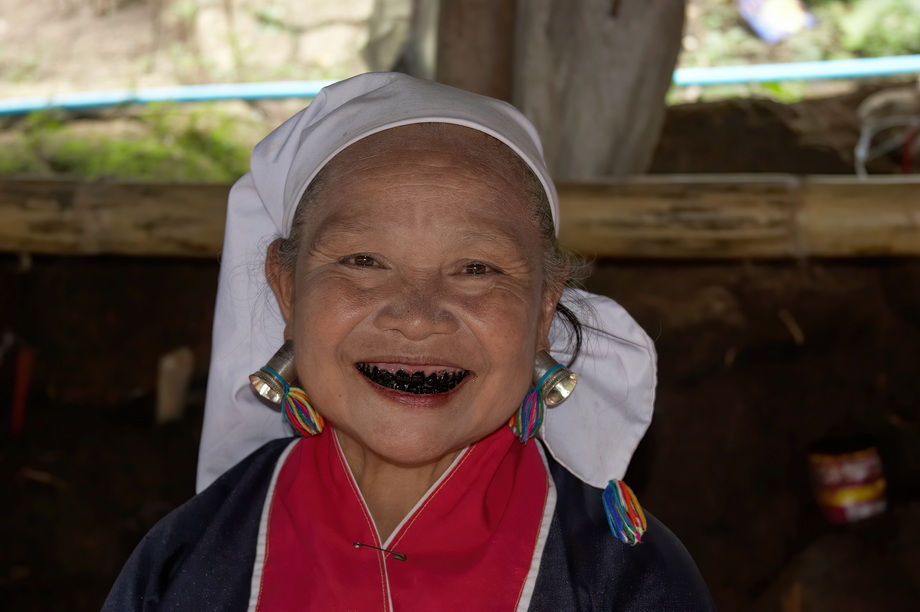


Photo Gallery: © Jordi Zaragozà Anglès / Thailand - 2006
 Extended info about Padaung People