

The Quechua people (also known as Quichua) are a diverse group of indigenous peoples from South America who share the Quechua language (Runa Simi) and a common history tied to the Inca Empire. With an estimated population of 13 to 16 million, they are the largest indigenous group in the Americas.
Andean Highlands: They primarily inhabit the mountains of Peru, Bolivia, and Ecuador, with smaller communities in Argentina, Chile, and Colombia.
The Language of the People: Quechua is a co-official language in Peru and Bolivia. While it has nearly 10 million speakers, it is considered "vulnerable" by UNESCO due to the dominance of Spanish in education and government.
Agriculture and Livestock: Their lives are deeply connected to the mountains. They practice high-altitude farming, growing potatoes, maize, and quinoa, and raise alpacas and llamas for their prized wool.
Reciprocity (Ayni and Mink'a): They maintain ancient systems of communal labor: ayni (mutual aid between families) and mink'a (collective work for the benefit of the entire community).
Textile Mastery: They are world-renowned for their weaving, using natural fibers and vegetable dyes to create complex geometric patterns that often tell stories or identify the weaver’s community.


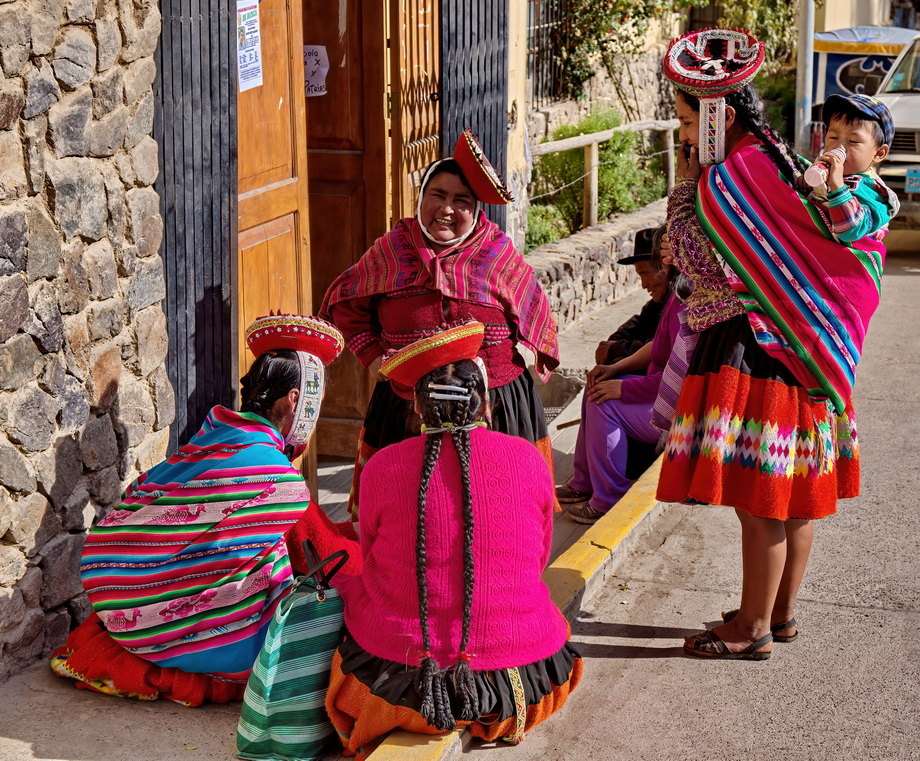
Photo Gallery: © Jordi Zaragozà Anglès / Peru - 2015
 Extended info about Quechua people