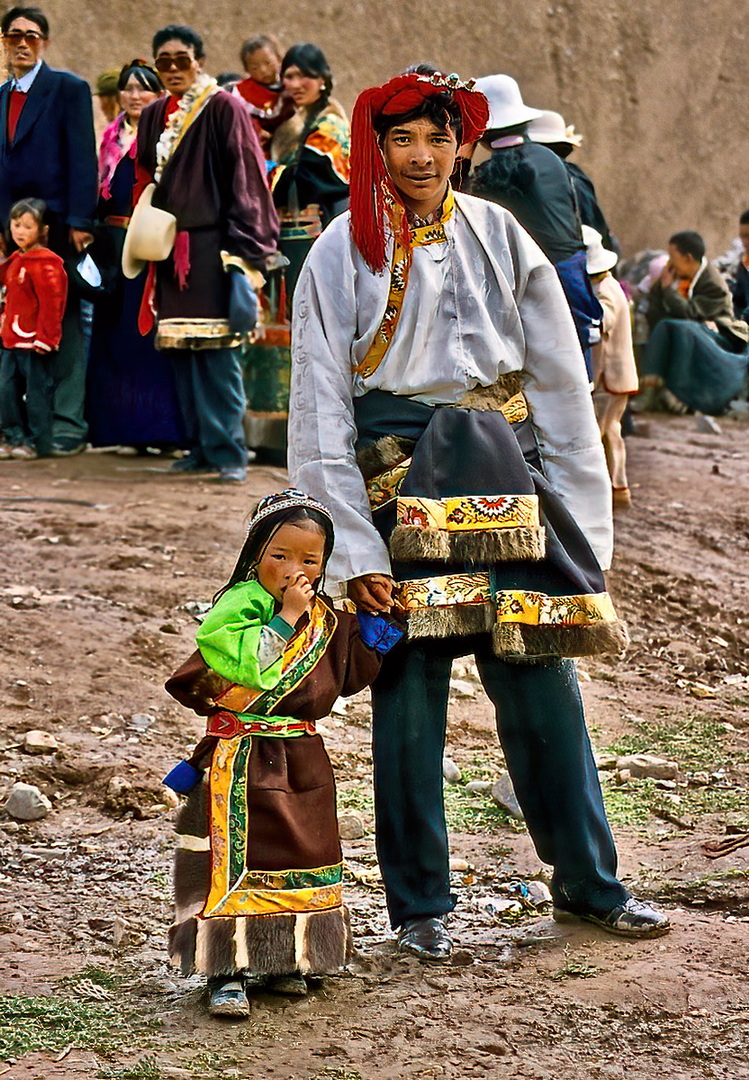
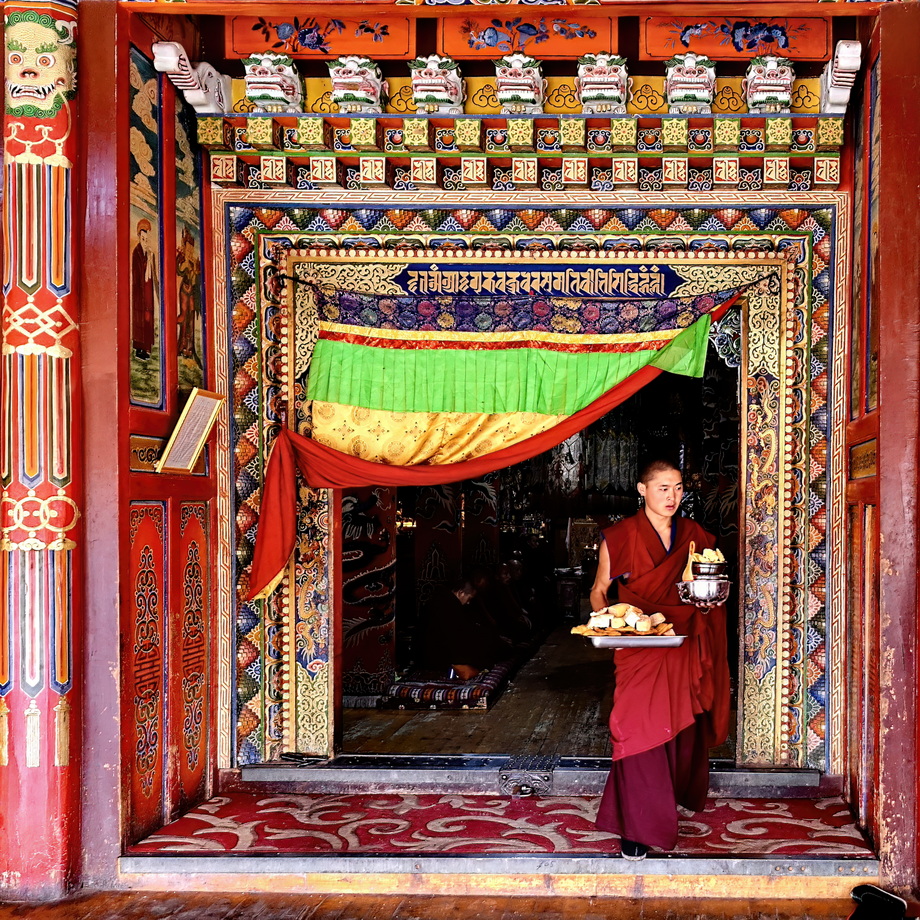
Tibetan people are an East Asian ethnic group native to Tibet, with an estimated population of about 7.8 million worldwide. The vast majority reside in the Tibet Autonomous Region of China, as well as in the Chinese provinces of Gansu, Qinghai, Sichuan, and Yunnan. Outside of China, significant communities exist in India (around 85,000-100,000 people), Nepal, and Bhutan.
Religion: Most Tibetans practice Tibetan Buddhism, which deeply influences their art, literature, and daily life. A minority observes the indigenous Bon religion, and there are also small communities of Muslims and Christians.
Language: They speak Tibetic languages (such as Central Tibetan, Khams, and Amdo), which belong to the Tibeto-Burman family. Although the spoken dialects may not be mutually intelligible, they share a common written form based on Classical Tibetan.
Gastronomy: The diet is based on tsampa (roasted barley flour), yak or mutton meat, and the famous yak butter tea. Momos (steamed dumplings) and thukpa (noodle soup) are also popular.
Clothing: The traditional dress is the chuba, a long, wide robe tied at the waist. Its style varies by region and climate, often being made of sheepskin in nomadic areas.
Economy: Traditionally, they have engaged in subsistence farming in the valleys and nomadic herding on the plateau. Today, tourism and the sale of handicrafts (such as thangka paintings and carpets) are important economic pillars.
Customs: They have unique traditions such as the giving of the khata (a white ceremonial scarf) as a sign of respect, or the use of prayer wheels and flags to gain spiritual merit.
Political Situation: Since 1959, following the uprising against Chinese authorities, many Tibetans live in exile, including the 14th Dalai Lama, their spiritual leader, who resides in Dharamsala, India.
 Extended info about Tibetan People